In European industrial and data center environments, even a minor fluctuation in power transmission or a cable failure can lead to expensive unplanned downtime. For sourcing managers and systems engineers, selecting a VDE Certified Power Cord is not merely a regulatory checkbox—it is the technical baseline for ensuring system continuity and operational safety.
The Foundation of European Market Access: Why VDE Matters
Understanding Compliance Standards for the EU Market
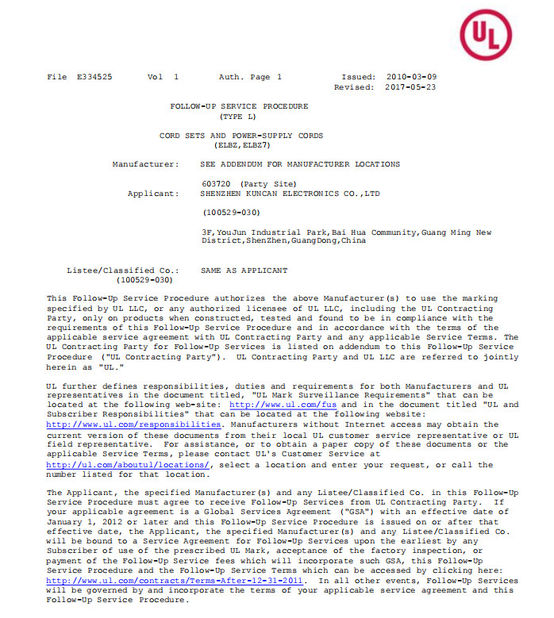
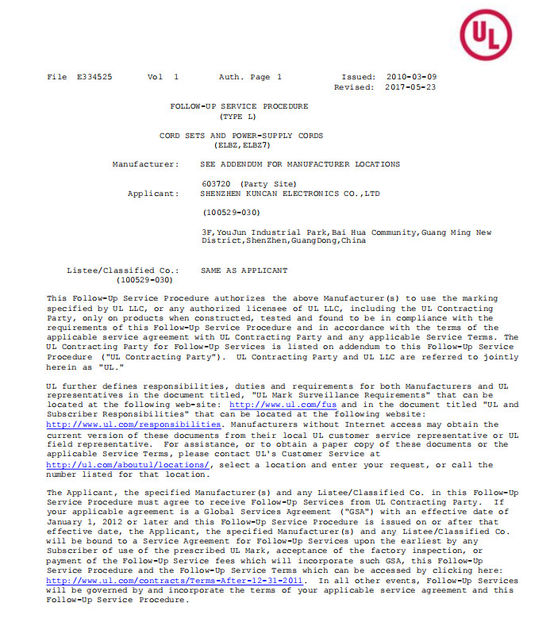
Entering the German and broader European Union markets requires adherence to the highest electrical safety standards. The VDE (Verband der Elektrotechnik) mark is a premier indicator of quality that goes beyond basic CE self-declaration. Obtaining VDE certification means that Kuncan power cords have undergone rigorous third-party testing, including dielectric strength, thermal cycling, and mechanical stress evaluations.
For a CEE 7/7 to IEC C13 Cable, VDE compliance guarantees that the plug and connector operate within safe temperature limits under a full load of 10A / 250V AC. Non-certified cables often pose risks such as insufficient conductor cross-sections—frequently seen in Copper Clad Aluminum (CCA) alternatives—which directly lead to overheating and significant voltage drops, potentially triggering hardware resets or permanent damage.
Technical Analysis: Reliability Parameters of CEE 7/7 to C13 Assemblies
Parametric Evidence for Industrial Stability
Evaluating the durability of a power lead requires a focus on physical architecture and material specifications rather than marketing claims:
-
Conductor Specification: Kuncan utilizes 100% Oxygen-Free Copper (OFC) cores following the H05VV-F 3G 0.75mm² or 1.0mm² harmonized standards. Pure copper ensures low electrical resistance ($< 26.0 Omega/text{km}$ at $20^circtext{C}$ for $0.75text{mm}^2$), minimizing energy loss.
-
Moulding Technology: The connection between the plug and the cable body features a fully moulded design with Integrated Strain Relief. This construction allows the cable to withstand over 5,000 bending cycles, making it suitable for automated production lines where frequent movement is required.
-
Jacket Integrity: The high-grade PVC jacket is engineered for a temperature range of -10°C to +70°C. This ensures the jacket remains chemically stable and does not crack or harden even in the narrow, high-heat exhaust corridors of server racks.
Sourcing Guide: Strategic Selection to Prevent Failure
Criteria for Technical Procurement
When selecting power components for large-scale deployment, consistency should be verified through three primary dimensions:
-
Certification Verification: Ensure the VDE logo, manufacturer code, and cable type are clearly embossed on the cable jacket. Kuncan ensures every batch complies with RoHS and REACH directives, safeguarding the entire supply chain’s environmental compliance.
-
Environmental Fit: In high-density PDU applications, prioritize C13 connectors with high insertion force standards to prevent accidental disconnection caused by vibration or gravity.
-
Mechanical Assessment: Confirm that the jacket thickness meets the minimum standard (typically ≥0.6mm). This serves as the primary defense against external physical impacts or compression in industrial settings.
Conclusion
Securing Long-Term Operational Integrity
In the competitive B2B landscape, the reliability of power infrastructure is a lifeline for enterprise operations. By implementing VDE Certified Power Cords from Kuncan, companies can effectively mitigate customs risks associated with non-compliance and significantly reduce unplanned downtime caused by cable failure, ensuring steady business growth across the European market.

 Your message must be between 20-3,000 characters!
 English